Meetings can be productive, efficient, and empowering. They can also be overly long, meandering, and frustrating. The difference often comes down to organization. Having a clear agenda and sticking to it can ensure that any meeting feels relatively on-point. That's particularly true for condo Board meetings.
If you've never made a formal meeting agenda, you may have questions about what it should include. Condominium Associates is happy to provide a brief outline.
What Should Your Meeting Agenda Include?
At the top of your agenda, you'll include basic details such as meeting date, time, and place. Beyond that, several standard items can help ensure a smooth, focused, and productive meeting of your condo Board. Remember that your governing documents will provide more insight into the rules and requirements for your agenda, as the agenda does matter for ensuring efficiency and order during association business.
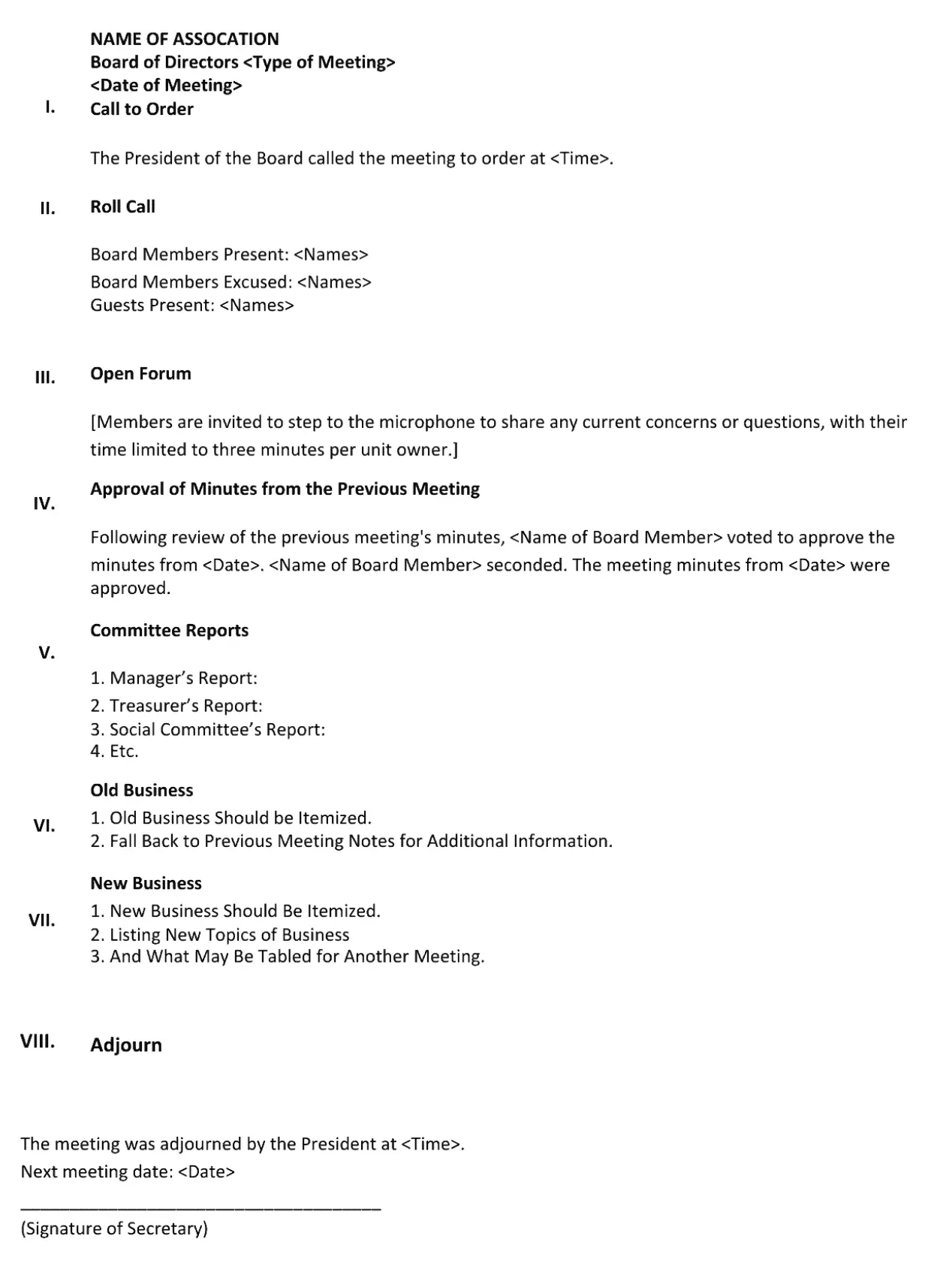
1. Call to Order
The first agenda item is usually the call to order, which involves the moderator commencing the meeting. You should always call the meeting to order at the scheduled start time, setting a precedent for punctuality and efficiency.
2. Roll Call
You don't necessarily have to have a roll call at every meeting. Still, it can be good to introduce the Board members to any unit owners who are present and, likewise, to welcome unit owners or other special guests to the meeting. A roll call can also be an excellent way to break the ice before the business portion of the meeting truly begins, providing it with value beyond just taking attendance.
3. Open Forum
One option in your agenda is an open forum, allowing members or owners to speak up about any pressing questions or concerns. Limit the time allotted for the open forum, ensuring that this portion of the meeting does not derail the entire agenda. If you don't have to have an open forum, you may decide to dispense with it altogether. Note that, in many states, it is against the law to take voting action on any open forum items, so this part of the meeting may be more informational.
4. Approval of Meeting Minutes
Next, allow just a few minutes for everyone to review a copy of the previous meeting's HOA and
condo meeting minutes. These minutes are usually kept and provided by the secretary or someone else the secretary appoints. A simple yay-or-nay vote is required to approve the previous meeting's minutes. Remember that the point here is to ensure that the minutes accurately reflect what happened at the last meeting, not to re-litigate every issue or decision.
5. Committee Reports
Following the approval of minutes, schedule some time for your regular committees to give their reports. You may include statements from a condo association management representative, providing financial updates, architectural filings, etc.
6. Old Business
After these reports, schedule time on the agenda to follow up on any old or unfinished business from a previous meeting, which is an excellent time to follow up about issues that required additional thought, research, or fact-finding or simply topics that you had insufficient time to discuss in the past.
7. New Business
From there, you will move on to new business. This meeting section requires any new items submitted to the Board for discussion, a vote, or action. Doing this provides an excellent chance for a more formal, planned discussion about items brought up during a previous open forum.
8. Adjournment
Finally, you'll adjourn the meeting. Before doing so, please provide a notice of meetings scheduled for the next month, including any special meetings you have planned.
What About Executive Sessions?
Now and then, your condo Board may need to schedule an
executive session, which may occur before or after the meeting or at an entirely separate time. Executive sessions are different from the regular agenda.
These sessions happen behind closed doors and usually involve a smaller group (e.g., just Board members). These meetings are confidential and may be used to discuss sensitive legal or personnel issues and issues related to unit owners who are
delinquent with their payments. You can find more information about when and how to call executive sessions in your bylaws or other governing documents.
Condo Association Meeting Agenda Template