How to Write HOA Board Meeting Minutes Guide

Doug Jenkins • September 8, 2022

Share this article

Person writing in a notebook at a white desk with a laptop nearby

The board regularly convenes meetings in homeowners associations to discuss agenda items and vote. It is imperative to take HOA board meeting minutes to record what transpires at these meetings. But what is the process for doing so?


HOA Board Meeting Minutes Defined


A set of board members governs homeowners associations. These board members hold regular meetings to discuss community issues and vote on action items, including anything from budget presentations and approval to the status of an ongoing renovation project. During these meetings, someone takes minutes, essentially a written record of the discussions and decisions made during the session.


Why Take Minutes at a Board Meeting


Meeting minutes are a critical part of board meetings, whether in the context of a homeowners association or any other organization. Many states make it mandatory for associations to record HOA board meeting minutes.


Apart from being a requirement in most states and governing documents, meeting minutes serve many purposes. Meeting minutes record what happened during the meeting, so you can quickly reflect on the discussions and decisions made, making it easy to resolve disputes based on misunderstandings or confusion.


Meeting minutes also offer legal protection to the association and its board. Suppose an HOA finds itself the recipient of a lawsuit due to a dispute or accusation. In that case, meeting minutes can prove the board's grounded decision-making process.


Additionally, meeting minutes guide future board members. Through these minutes, prospective board members can review the board's past actions and mistakes, making their decision-making process smoother.


Who is in Charge of Writing the Board Meeting Notes


In most homeowners associations, the board secretary takes on the task of writing HOA board meeting minutes. The secretary can, however, usually assign the job to someone else but must still review the meeting minutes and give their approval.


What to Include in the Board Meeting Notes


Many associations mistake writing the minutes as a transcript, with word-for-word dialogue and unnecessary comments. But, this is not the proper way to take a board meeting minutes. You should not include certain items in your HOA board meeting minutes.


Generally speaking, the included items in your minutes are the ones that appear on the agenda because board members can't discuss or vote on items that aren't on the plan. Here are the things you must include in your board meeting minutes:


  • Meeting date
  • Meeting time
  • What time was the meeting called to order and by whom
  • Names of present and absent board members
  • Approval of the minutes of the previous session, including any amendments or rectifications
  • Additions to the agenda
  • Establishing a quorum
  • Financial report or presentation
  • Any motions proposed and what they are, who presented them, and who seconded them
  • Any voting that took place, including the results and those who voted for or against the item
  • Taken actions
  • Any resolutions or decisions made
  • Unfinished business
  • New business
  • Open forum discussion
  • The date and time of the next board meeting
  • Adjournment time


What note to include in the meeting minutes: 


  • Personal comments
  • Opinions
  • Irrelevant discussions
  • Word-for-word dialogue
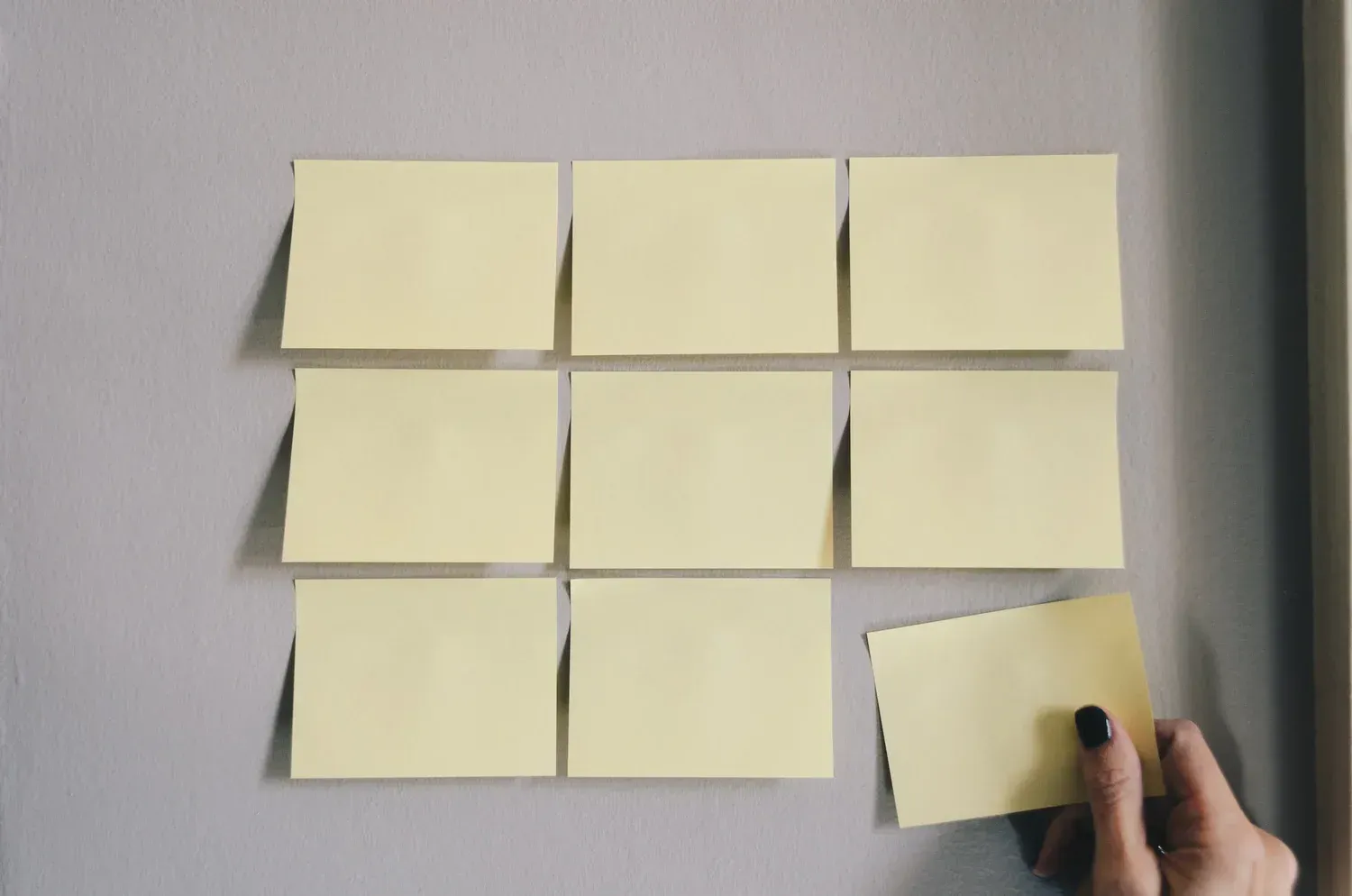
Hand placing a yellow sticky note on a wall of blank yellow sticky notes

How to Write Board Meeting Minutes for your HOA


Taking down meeting minutes can be a daunting task if you have never done it before. There are some steps that you can follow, though, to make the process easier. Here's how to write up meeting minutes for a board meeting:


1 Prepare for the Board Meeting


Not all homeowners associations use the same format for meeting minutes. Each one has its style or method of recording. If you don't know where to begin, consider talking to your board president about the proper format. You can also seek help from the person who previously occupied your board position.


In addition, some governing documents contain basic guidelines for writing board meeting minutes. If there is no specific format, you can use past minutes as a basis. You can also work with other board members to develop a structure or use your own. Just make sure it's understandable and structured.


2 Use the Agenda as a Guide


Every board meeting will have a plan — a list of items the board will discuss and vote on for the community. Since the schedule already contains the expected events of the meeting, you can use it as an outline for your minutes. Type in or write the agenda, and then fill in the details of what taken motions, who seconded them, and the actions made. Agendas usually already follow a structure, so it will be much easier for you to use it as a starting point.


3 Write Objectively


Although this is an obvious one, we can't stress it enough. It is imperative always to write your HOA board meeting minutes using an objective tone.


You may discuss some controversial topics during the meeting, but that does not mean you should include them in your minutes. If they relate to the plan, try to summarize as much as possible. Exclude any emotional outbursts or deliveries. In other words, you should only and always stick to the facts.


4 Ask for Clarification


Meeting minutes can be challenging since you must simultaneously listen to what's happening and jot down the essential details. And, let's face it, not everyone has lightning-fast typing or writing skills, so you are bound to miss a few key points.


When that happens, don't be afraid to ask for clarification. Don't get creative or imaginative. It is also best to clarify specific points immediately instead of after the meeting. This way, the discussions and decisions are fresh on everyone's minds.


5 Make Necessary Edits


You can undoubtedly make edits if your HOA board meeting minutes need a little tweaking. Remove unnecessary details, such as personal commentary or chitchat, and make sure the format is understandable. Proofread the copy as well to ensure there are no typos or parts that don't make sense. If you are new to this, you will probably need help from your fellow board members or your HOA manager.


6 Distribute the Board Minutes


Board members should always keep homeowners in the loop. Even though a portion of the board meetings is typically open to all owners, not everyone has time to show up. Most members stay informed through meeting minutes.


As such, you should distribute the meeting minutes within a reasonable amount of time. Some associations do this via email or in person. Others post them on their HOA website. Make sure to check your state laws and governing documents on any provisions concerning the distribution of meeting minutes.


7 Save Digital and Physical Copies


Meeting minutes are essential tools in HOA management, so you shouldn't keep only a single copy. In addition to making and storing physical documents of the minutes, it is worth doing the same digitally. Paper records can deteriorate or fade over time. But digital copies can last forever and are easier to distribute, store and copy.


Can HOA Board Meetings Be Recorded?


You may wonder whether it is possible, or even permitted, to record board meetings using an audio or video recorder. The answer, though, isn't quite simple.


In some states, homeowners associations can't prohibit members from recording board meetings. However, HOAs can place reasonable restrictions, such as how far the camera should be from anyone.


However, HOAs should look to their governing documents in states where such provisions don't exist. Usually, only board members have a right to record board meetings. If you wish to register your sessions as a guide for taking minutes, destroy the tape afterward. The very existence of such a recording can put the association at risk of liability.


HOA Board Meeting Minutes Template


Taking meeting minutes is not always fun, but it remains a necessary part of board meetings. 


Suppose you are still having trouble picturing what your minutes should look like; HOA Management offers a sample of the meeting minutes below: Download the HOA Board Meeting Minutes Template Here. Recording HOA board meeting minutes will be a breeze using these steps and our helpful template. Just remember to write them with objectivity, clarity, and accuracy in mind.


Contact Condominium Associates


Many associations outsource minutes-taking to an HOA management company. Contact Condominium Associates today for more details.
Recent Posts

By Association Management Team • October 21, 2026
Individual directors sometimes make commitments to vendors, residents or contractors without board authorization. This creates confusion and can undermine the authority of the entire board.
By Association Management Team • October 21, 2026
Healthy boards can disagree without becoming dysfunctional. The real issue isn't disagreement but whether directors can deliberate professionally, make a decision, and support the board's final action.
By Association Management Team • October 21, 2026
Boards often focus on the premium while overlooking the financial impact of a large deductible. This article explains why the deductible belongs in broader financial and emergency planning.
By Association Management Team • October 19, 2026
Sometimes the reserve study identifies funding needs that the existing budget simply cannot support. This article explains how boards can approach the gap without jumping immediately to a special assessment.
By Association Management Team • October 16, 2026
When disaster strikes—whether it’s a hurricane, fire, or a burst pipe—HOA boards are often forced to act before the insurance claim is settled. The gap between the loss and the arrival of insurance funds can be stressful and confusing.
By Association Management Team • October 16, 2026
Insurance renewal shouldn’t be a signature exercise. Boards should understand what changed, what the property is currently valued at, how deductibles affect the association, and whether coverage still reflects the community’s actual risks.
Modern single-story suburban house with stone accents, blue-gray siding, and a two-car garage under a clear sky
By Doug Jenkins • October 12, 2026
Learn what Florida’s Rule 61B-19.004 means for HOA board education, including director certification, continuing education, and board training requirements.
Stressed person buried in paperwork with an alarm clock on their head in an office
By Association Management Team • October 12, 2026
A final checkpoint for Florida condo boards ahead of December 31, 2026: confirm SIRS status, reserve funding, inspection records, and owner communication.
Aerial view of modern high-rise apartment towers amid dense green trees in a residential neighborhood
By Doug Jenkins • October 6, 2026
Learn what Florida’s Rule 61B-19.001 means for condominium board education, including BMC, milestone inspection, SIRS, and director certification requirements.
Four coworkers lean over a table, discussing colorful papers and markers in an office.
By Association Management Team • October 5, 2026
Completing a Structural Integrity Reserve Study is only the start. How Florida condo boards turn findings into reserve funding, timelines, and owner updates.