

HB 657 “HOA Killer Bill” — What Florida HOA Boards Need to Know

Doug Jenkins • January 23, 2026

Share this article

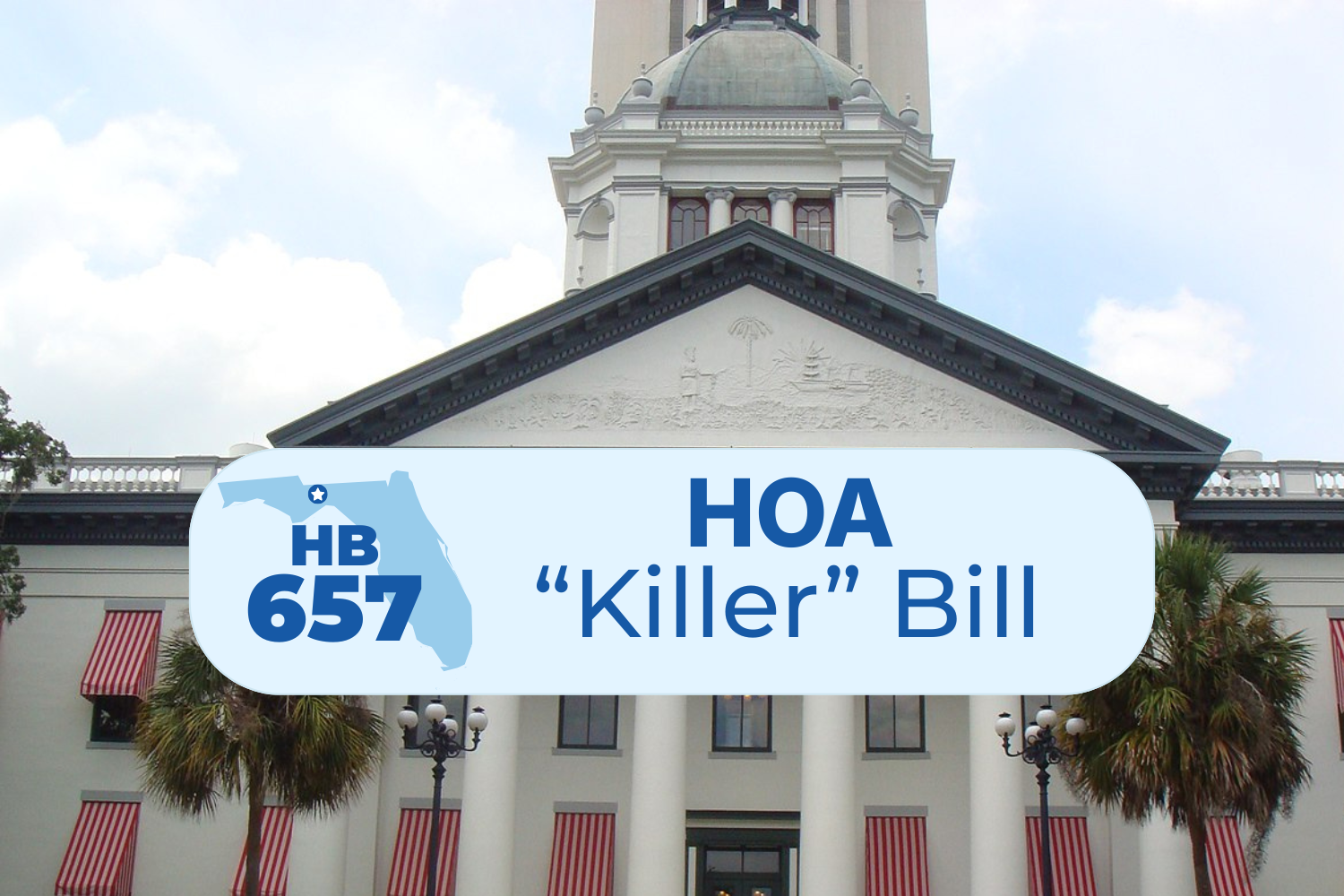
Florida Capitol with “HOA Killer” bill graphic and HB 657 badge over the building facade

Florida House Bill 657 ( HB 657 ) has quickly become one of the most discussed HOA reform proposals in years — so much so that it has been widely nicknamed the “HOA Killer Bill.” While that term is not part of the bill’s official title, it reflects the seriousness of what HB 657 proposes: a structured legal pathway that would allow homeowners to pursue the termination (dissolution) of their HOA , along with a major change to how HOA disputes could be handled in Florida.  

Below is a plain-English overview of what HB 657 proposes, why it matters, and what HOA boards should do now.

What is HB 657?

HB 657 is a proposed Florida bill titled “Community Associations” that would make significant changes to HOA operations and dispute resolution under Chapter 720, Florida Statutes. The bill addresses multiple HOA governance issues — including dispute procedures, court handling, and board responsibilities — but it has drawn its strongest reactions for one major reason: it outlines an HOA termination process with court involvement.

Why it is being called the “HOA Killer Bill”

The nickname “HOA Killer Bill” is not an official label. It comes from commentary surrounding the bill because HB 657 proposes a process that could make it easier for homeowners to initiate and pursue HOA termination.

Unlike prior HOA legislation that focused on elections, records, meetings, or fining procedures, HB 657 goes further by describing how an HOA could legally cease to exist and how the winding-down process would work.

A New Statutory Termination Path for HOAs

HB 657 proposes a step-by-step legal framework that would allow homeowners to pursue termination of their HOA through a petition and voting process, with court review. Under the proposed structure, the process could include appointment of a termination trustee and the handling of HOA assets, liabilities, and the winding down of operations.

This is the central reason for the bill’s reputation. Many communities have common property responsibilities — roads, drainage, stormwater infrastructure, entrances, gates, walls, recreational amenities, and lighting systems. Dissolving an HOA in such communities raises immediate and practical questions: who owns the property, who maintains it, and who pays for it going forward?

A “Community Association Court Program”

HB 657 also proposes authorization for judicial circuits to establish a Community Association Court Program, which is essentially a specialized court track or program designed to manage association disputes more efficiently.

If this structure is implemented, it could significantly impact how HOA-related disputes are resolved by shifting cases more directly toward court oversight and standardized handling.

Changes to Current Dispute Processes

HB 657 also proposes changes to dispute procedures that may reduce the use of certain required pre-suit steps (commonly referenced as pre-suit mediation requirements). The result could be that HOA disputes move faster into formal legal proceedings.

For HOA boards, the practical takeaway is simple: if HB 657 passes, disputes may become faster, more formal, and potentially more expensive unless governance practices are proactive and disciplined.

Where HB 657 Stands & What You Should Do

As of this update (1/23/26):

  • HB 657 was filed on December 4, 2025
  • It moved through committee referral
  • It was heard in the House Housing, Agriculture & Tourism Subcommittee and a Committee Substitute (CS) was reported and filed on January 22, 2026
  • The bill lists an effective date of July 1, 2026, if passed

This means the bill is still a proposal — but it is active, gaining attention, and being taken seriously across the HOA industry.  

Why HOA Boards Should Take This Seriously — Even if the Bill Changes or Fails”

The Even if HB 657 is amended heavily during session or fails entirely, it signals something important: HOA governance remains a high-interest issue in Florida. Owner complaints, legislative attention, and pressure on boards to improve transparency and fairness are not going away.

When a bill like this gains traction, it usually indicates continued momentum toward broader HOA reform — even if the final outcome is different than the initial proposal.

What HOA boards should do now (regardless of outcome)

Here are practical steps that reduce risk today — whether HB 657 becomes law or not:

  • Audit enforcement consistency. Selective enforcement claims often begin with “you let it slide last time.” Consistency is one of the strongest protections an HOA board has.
  • Professionalize written communication. Letters and emails should always be written as if they will be reviewed by an attorney or judge — because they might be.
  • Ensure minutes clearly reflect motions and votes. Minutes should document board decisions, not debates.
  • Strengthen records discipline. Many disputes begin with records delays, incomplete responses, or unclear processes.
  • Make financial reporting easier to understand. Owners do not need accounting complexity — they need clarity: what changed, why it changed, and what the board is doing about it.
  • Review collections policies and procedures. Fair, consistent collections reduce cost shifting and protect community finances.
  • Tighten vendor and contract controls. Clear scope, clear performance expectations, and insurance verification should not be optional.
  • Communicate earlier, not later. Silence creates rumors. Early communication reduces escalations.
  • Plan reserve projects transparently. Deferred maintenance combined with vague reserve planning is one of the fastest ways to lose owner trust.
  • Treat governance like a system. High-performing boards operate through predictable processes — not improvisation.

Bottom Line on This HOA Bill

HB 657 has earned its “HOA Killer Bill” nickname because it proposes a formal process that could allow homeowners to pursue termination of their HOA, while also shifting dispute handling toward court-centered resolution.

Regardless of whether the bill becomes law, the message for HOA boards is clear: trust, transparency, and consistent governance are now essential risk controls — not optional “best practices.”


Recent Posts

By Doug Jenkins July 9, 2026
Florida board members carry real legal obligations to their owners — most volunteers don't fully understand what fiduciary duty means until something goes wrong.
Homeowner Nightmare Scenarios
By Doug Jenkins June 11, 2026
How to deal with homeowners and residents that are upset or have issues with the rules and policy enforcement of your HOA, condo or other association
Avoid Legal Actions Against Your Association
By Doug Jenkins June 11, 2026
A Must-Read Guide for Volunteer Board Members of HOA, Condo, and Other Florida-Governed Owner Associations
Policy Enforcement Issues
By Doug Jenkins June 11, 2026
What are the Florida owner association must-have resident policies and what others should your board consider?
Every New Board Member Needs to Know
By Doug Jenkins June 11, 2026
Learn the most important questions you should ask before stepping into a new volunteer board role, including where you can find some answers.
Community Associations are Addressing Pickleball vs Tennis Court Time
By Doug Jenkins June 11, 2026
Lifestyle amenities are valuable and important reasons owners and residents chose your association — the best boards understand and manage accordingly
Fund Could Be Killing Home Sales
By Doug Jenkins June 11, 2026
How reserve fund requirements, lender guidelines, and Florida condo laws are affecting home sales and financing
Criminal Penalties for HOA Board Members
By Doug Jenkins June 11, 2026
Florida has introduced criminal liability for certain board member actions — what counts as a violation, who's at risk, and how to stay protected.
Guide to Dispute Escalation
By Doug Jenkins June 11, 2026
Most HOA disputes fail because there’s no process — the strongest Florida boards use escalation, documentation, and neutrality to stay in control
Hireand Fire HOA Vendors
By Doug Jenkins June 11, 2026
Vendor selection, contract management, and termination are among the most legally and operationally risky tasks a Florida board handles. The stakes are high: a misstep can lead to lawsuits, wasted money, or a project that stalls halfway through hurricane season. Here’s how your board can approach vendor relationships with confidence—and avoid the most common traps.